IoT is used in a smart waste management system to ensure efficient door-to-door waste collection.
Internet of Things (IoT) is a technology used in an intelligent waste collection system for micro-level monitoring of door-to-door waste collection. NEC India uses RFID tags to detect whether a trash bin is full.
The sensors on the trash bins help in keeping track of uncollected bins. A real-time alert is generated with the help of RFID tags, which ensures that the waste collector doesn’t miss any full trash bin.
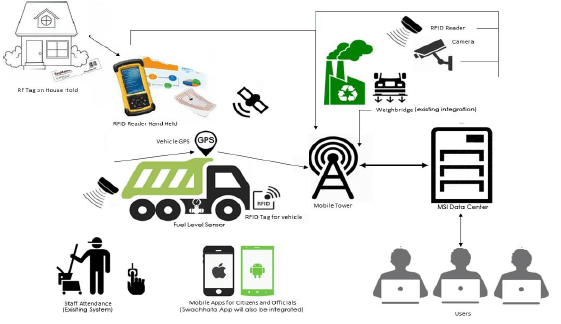
The weighbridge monitoring system in smart waste collection uses three cameras. The first camera focuses on the license plate of the truck, the second camera focuses on the trash bin, and the third camera focuses on capturing the waste.
The operations can be optimized with the help of IoT. Real-time information is generated about the waste bins that have to be collected. The waste-collecting vehicle can optimize its routes based on the information available about the trash bins that need to be collected.
The waste management contractor can prepare an analytical report based on the data combination of vehicle movement and reading of RFID tags.
A real-time status of the incidents across the city can be gathered with the help of IoT technology. Sensor-based PTZ cameras provide live feeds to the municipality about incidents like unauthorized waste dumping.
A citizen can also register his or her grievances with the help of a city-level application. A contact center can facilitate the citizen in registering their grievances.
The waste collection contractor can track the vehicles with the help of IoT. This will ensure that the waste collection is efficient. In addition to this, the waste collector can do route replays to check for any discrepancies.
Source referred

 NEC Corporation India